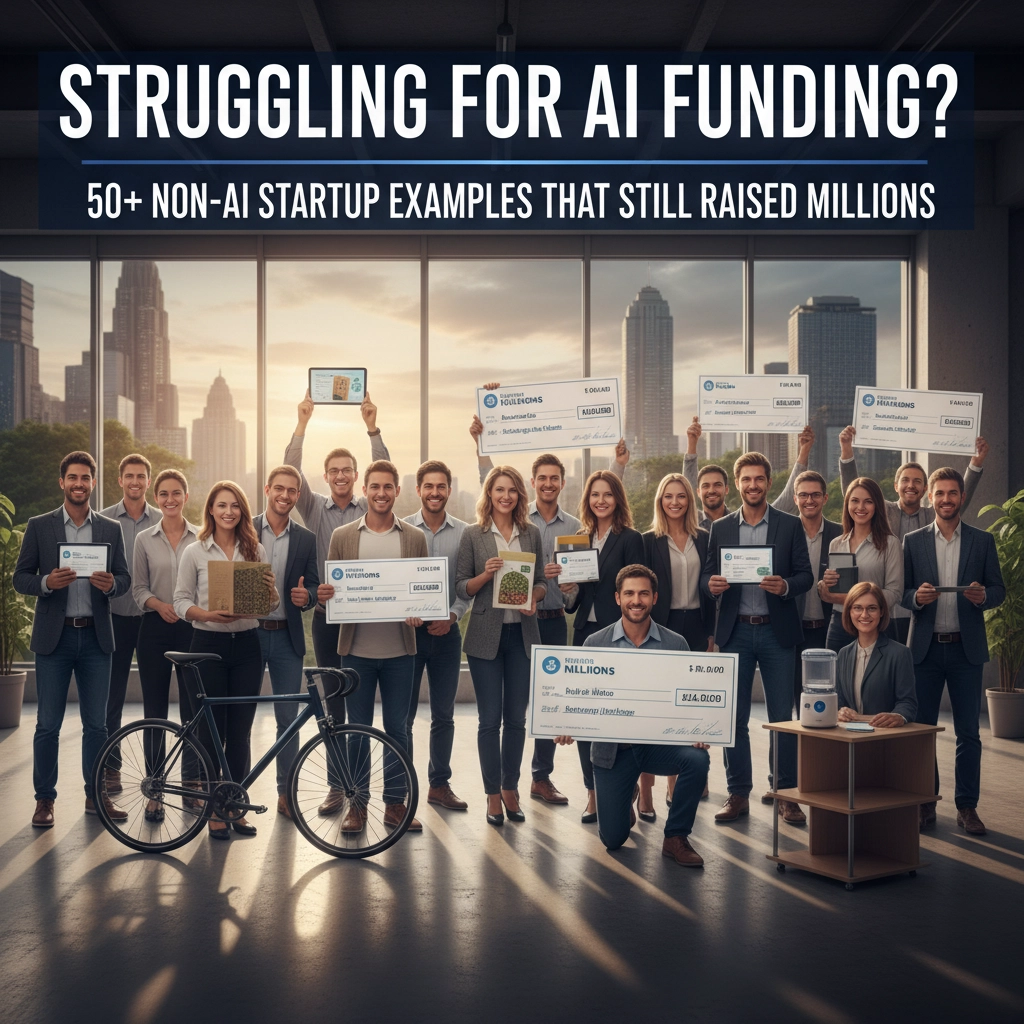
Struggling for AI Funding? 50+ Non-AI Startup Examples That Still Raised Millions
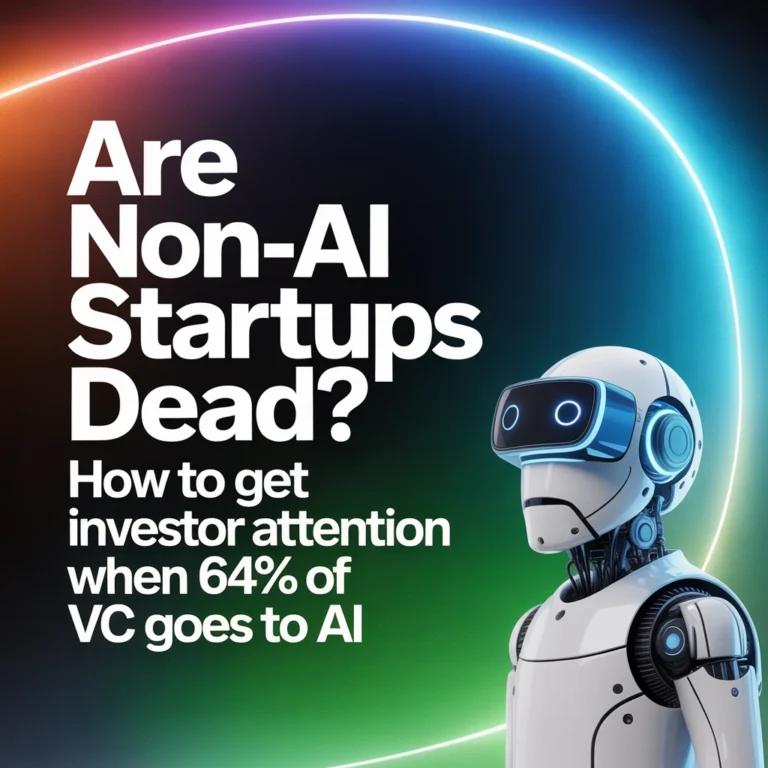
While AI startups are grabbing headlines with billion-dollar funding rounds, plenty of non-AI companies are still raising serious cash. The truth is, only about 48% of venture funding goes to AI companies: which means 52% is still up for grabs for everything else.
The trick? Understanding which sectors are still hot and how to position your non-AI startup in today's market. Let's dive into the companies and categories that are proving investors wrong about the "AI or bust" mentality.
Fintech Still Rules the Funding Game
Financial technology remains one of the strongest non-AI sectors for raising capital. Companies in payments, lending, and financial infrastructure continue to attract massive rounds.
Stripe raised $6.5 billion in 2021 at a $95 billion valuation, and payment processors across the board are still seeing strong investor interest. Klarna, the buy-now-pay-later giant, has raised over $4 billion total, proving that financial innovation doesn't need AI to be compelling.
B2B fintech especially continues to thrive. Ramp, the corporate card and expense management company, raised $750 million across multiple rounds. Brex pulled in $315 million. These companies solved real financial pain points without needing machine learning models.

Healthcare Beyond AI Gets Massive Funding
While AI-powered drug discovery gets attention, traditional healthcare innovation is far from dead. Medical devices, healthcare services, and biotech companies are raising substantial rounds.
Ro (formerly Roman) raised over $500 million for telehealth services. Thirty Madison secured $140 million for specialized care. Headspace Health pulled in $93 million for mental health services. These companies focus on access and delivery rather than AI algorithms.
Medical device companies are particularly strong. Butterfly Network raised over $350 million for portable ultrasound devices. Dexcom has raised billions for continuous glucose monitoring. The key is solving clear medical problems with proven technology.
Climate Tech: The Quiet Funding Winner
Climate technology might be the biggest non-AI winner in venture funding. From carbon capture to renewable energy, environmental startups are attracting serious cash.
Commonwealth Fusion Systems raised $1.8 billion for fusion energy. Climeworks secured over $650 million for direct air capture. Redwood Materials raised $792 million for battery recycling. These are massive rounds for companies focused purely on environmental solutions.
The climate tech space includes everything from electric vehicle charging networks to sustainable agriculture. ChargePoint has raised over $660 million. Impossible Foods raised $500 million. Apeel Sciences secured $250 million for food preservation technology.
E-commerce and Retail Innovation
Despite Amazon's dominance, e-commerce startups continue raising substantial funding by focusing on specific niches or innovative approaches.
Faire, the wholesale marketplace, raised $416 million. Thrasio, which acquires Amazon FBA businesses, raised over $3.4 billion. Resident raised $165 million for furniture e-commerce. Italic secured funding for direct-to-consumer manufacturing.
Social commerce is particularly hot. Whatnot raised $260 million for live shopping. GOAT raised $195 million for sneaker resale. These platforms combine e-commerce with community and entertainment.

SaaS Still Software-as-a-Service Strong
Business software companies that don't rely on AI continue to raise significant funding. The key is solving specific workflow problems or serving underserved markets.
Notion raised $343 million for workplace productivity. Figma raised $332 million before its Adobe acquisition. Airtable secured $735 million for database software. Canva raised over $560 million for design tools.
Vertical SaaS performs especially well. Toast raised hundreds of millions for restaurant management. Procore focuses on construction management. Veracross serves schools. ServiceTitan targets field service businesses.
Logistics and Supply Chain
The pandemic highlighted supply chain vulnerabilities, creating opportunities for logistics startups. Flock Freight recently raised $60 million for shared truckload shipping, proving there's still appetite for non-AI logistics solutions.
Flexport has raised over $2.3 billion for freight forwarding and customs. project44 raised $420 million for supply chain visibility. FourKites secured $260 million for logistics tracking. These companies focus on transparency and efficiency rather than artificial intelligence.
Warehouse automation without AI also attracts funding. 6 River Systems (acquired by Shopify) and Locus Robotics have raised substantial rounds for robotic fulfillment solutions that don't require machine learning.
Consumer Apps and Entertainment
Consumer-facing apps that solve real problems or provide genuine entertainment value continue to raise funding. The key is demonstrating strong user engagement and clear monetization.
Discord raised $500 million for community chat. Clubhouse raised $310 million for audio conversations. BeReal secured funding for authentic photo sharing. Strava raised money for fitness tracking and social features.
Gaming remains particularly strong. Epic Games raised $2 billion. Roblox went public with massive valuation. Unity has raised hundreds of millions. Gaming companies prove that entertainment value doesn't require AI to attract investor interest.

Real Estate Technology
PropTech continues to attract significant funding as the real estate industry slowly modernizes. Opendoor raised over $1.7 billion for iBuying. Compass raised $1.5 billion for real estate brokerage technology. VTS secured funding for commercial real estate leasing.
Property management startups also perform well. AppFolio focuses on property management software. Buildium serves small property managers. RentSpree streamlines rental applications. These companies modernize traditional real estate processes.
What Non-AI Startups Do Right
Successful non-AI fundraising isn't about avoiding technology: it's about solving clear problems with proven solutions. These companies share several characteristics:
Strong Unit Economics: They can show clear paths to profitability without burning cash on experimental AI models. Flock Freight and similar logistics companies demonstrate immediate cost savings for customers.
Market Size Clarity: Investors can easily understand the total addressable market. Fintech serving small businesses or healthcare addressing specific conditions provides clear market boundaries.
Defensible Moats: Network effects, regulatory advantages, or deep integrations create competitive protection. Stripe's payment infrastructure and Toast's restaurant integrations are hard to replicate.
Proven Demand: Customer traction validates the need. These companies often have waiting lists, strong retention metrics, or clear ROI for customers.
The Funding Strategy for Non-AI Startups
If you're building a non-AI company, focus on fundamentals. Investors may be distracted by AI, but they still fund companies with strong metrics and clear value propositions.
Emphasize your competitive advantages that don't rely on cutting-edge technology. Regulatory knowledge, industry relationships, operational excellence, or unique distribution channels can be more valuable than algorithms.
Show financial discipline. While AI companies burn cash on compute and talent, non-AI startups can demonstrate capital efficiency. This becomes increasingly attractive as investors focus on unit economics.
Target investors who understand your specific market. Fintech VCs understand payment flows. Healthcare investors know regulatory challenges. Climate tech funds appreciate environmental impact metrics.
The funding landscape isn't as AI-dominated as headlines suggest. Smart investors recognize that most business problems don't require artificial intelligence: they require good execution, clear value propositions, and sustainable unit economics. These 50+ examples prove that non-AI startups can still raise substantial funding by focusing on what has always mattered: solving real problems for real customers.