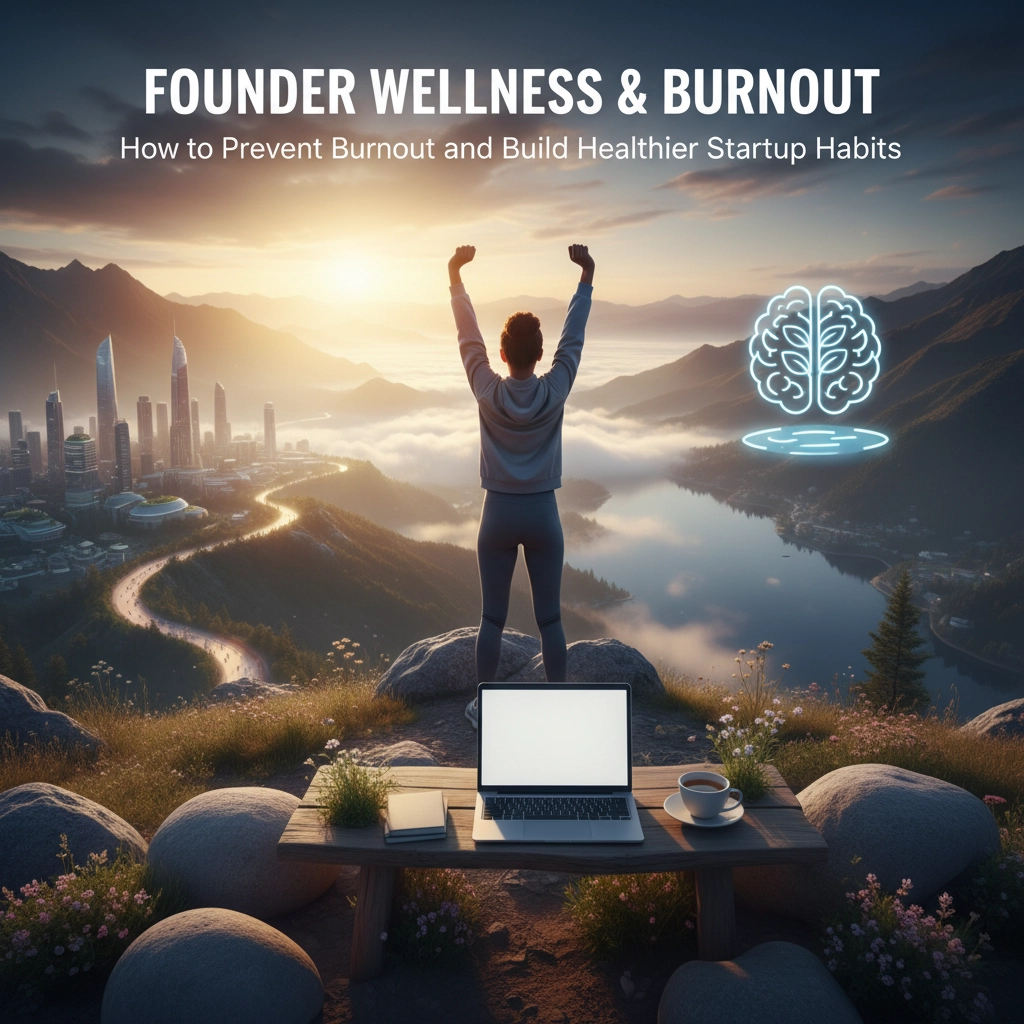
Founder Wellness & Burnout: How to Prevent Burnout and Build Healthier Startup Habits
Let's be real: building a startup is like running a marathon at sprint speed while juggling flaming torches. Most founders I talk to are running on fumes, surviving on coffee and sheer willpower, thinking they'll "rest when they make it."
But here's the thing, burnout isn't a badge of honor. It's a predictable outcome when you push your body and mind beyond their limits without proper recovery. And contrary to what hustle culture tells you, burning out actually makes you less effective, not more.
The good news? Preventing burnout isn't rocket science. It just requires being intentional about building habits that actually sustain you for the long haul.
Why Founder Burnout Hits Different
Before we dive into solutions, let's acknowledge what makes founder burnout unique. Unlike employee burnout, where you can potentially switch jobs or departments, founder burnout comes with the weight of an entire company on your shoulders. Every decision, every setback, every small victory, it all flows through you.
You're simultaneously the visionary, the problem-solver, the cheerleader, and often the person emptying the trash. No wonder 72% of entrepreneurs report mental health concerns, with burnout being one of the top issues.

Start with the Basics: Your Physical Foundation
I know, I know. You've heard this before. But stick with me because most founders completely underestimate how much their physical state affects their business performance.
Sleep isn't optional. When you're running on 4-6 hours a night (sound familiar?), your cognitive function takes a nosedive. We're talking about a 63% increase in depression and fatigue, plus your memory and concentration suffer massively. Meanwhile, founders who get adequate sleep report 21% better focus and 41% higher work motivation.
Think about it: would you rather work 16 hours at 60% capacity or 10 hours at 95% capacity? The math is pretty clear.
Move your body regularly. I'm not talking about becoming a fitness influencer. Even 20-30 minutes of movement daily, walking, yoga, hitting the gym, whatever works for you, makes a huge difference. Exercise literally rewires your brain for better stress management and clearer thinking.
Eat like you give a damn about your business. Your brain burns through glucose like crazy when you're making decisions all day. Skipping meals or living on energy drinks sets you up for energy crashes and poor judgment calls. Keep it simple: regular meals with protein, healthy fats, and complex carbs.
Mental Health Isn't a Luxury, It's a Business Strategy
The most successful founders I know treat their mental health like any other critical business metric. They track it, invest in it, and make decisions based on it.
Schedule breaks like you schedule investor meetings. Most founders wait until they're completely fried before taking a break. That's like waiting for your car to break down before getting an oil change. Block 90 minutes weekly for completely offline time. Take 10-minute walks between back-to-back calls. Set your Slack to "Do Not Disturb" after business hours.
These aren't suggestions, they're requirements if you want to stay sharp.

Practice mindfulness (without the woo-woo). You don't need to meditate for hours or chant mantras. Mindfulness can be as simple as taking three deep breaths before important calls, or spending five minutes journaling about what went well that day. The goal is creating mental space between stimulus and response, so you're making deliberate choices instead of just reacting.
Remember why you started. When work feels disconnected from purpose, burnout accelerates. Set monthly reminders to revisit your "why." What impact do you want to have? What does success actually look like for you (not just for investors or society)? Keep this connection alive.
Master the Art of Delegation and Boundaries
Here's a hard truth: if you're trying to do everything yourself, you're not being a good founder, you're being a bottleneck.
Create a "stop-doing" list. Write down everything that drains your energy or takes time away from high-impact activities. Every week, pick one thing from that list and either delegate it, automate it, or eliminate it entirely. Yes, it might cost money upfront. But what's the cost of your burnout to the business?
Start with tasks like payroll, basic bookkeeping, or social media management. These are important but don't require your specific expertise.
Set actual boundaries. "Work-life balance" feels impossible as a founder because the work never really stops. But you can create boundaries around when and how you engage with work. Maybe it's no emails after 9 PM. Maybe it's one full day off per month. Maybe it's leaving your phone in another room during family dinner.
The specific boundaries matter less than having them and sticking to them.

Build Your Support Network (Before You Need It)
Burnout thrives in isolation. When you're stuck in your own head, problems feel bigger and solutions seem impossible. Having a strong support network isn't just nice: it's essential for maintaining perspective and sanity.
Connect with other founders regularly. Other entrepreneurs get the unique challenges you're facing in ways that friends and family (bless them) simply can't. They've been through the roller coaster of near-failures, small wins, and existential crises that come with building something from nothing.
Join founder groups, attend networking events (even virtual ones), or just grab coffee with someone who's a few steps ahead of you in their journey. The goal isn't to compete: it's to remind yourself that you're not alone in this.
Don't neglect your existing relationships. It's easy to let friendships and family relationships slide when you're in startup mode. But these connections are often your strongest source of emotional support and perspective. They knew you before the company existed, and they'll know you after.
Consider professional help. Therapy, coaching, or other professional support isn't admitting defeat: it's getting the right tools for the job. Just like you might hire a consultant for go-to-market strategy, sometimes you need professional help for managing stress and maintaining mental health.
Create Sustainable Work Practices
The goal isn't to work less (though you might end up doing that). The goal is to work more sustainably so you can maintain high performance over years, not months.
Focus on priority, not quantity. When you're overwhelmed, the instinct is to work more hours. But working longer often just means you're doing more low-impact tasks at a lower quality. Instead, get ruthless about prioritization. What three things absolutely must happen today for your business to move forward?
Break big projects into smaller chunks. Massive, undefined projects create anxiety and paralysis. Break them down into specific, actionable tasks. Instead of "launch product," think "complete user testing with 5 customers by Friday" or "finalize pricing strategy by Tuesday."

Batch similar activities. Context-switching burns mental energy. Group similar tasks together: all your calls in the morning, all your deep work in the afternoon, all your emails at specific times rather than constantly throughout the day.
Celebrate Progress (Seriously)
In the startup world, there's always another milestone, another goal, another mountain to climb. If you're only celebrating when you "make it," you'll burn out long before you get there.
Set smaller milestones and actually acknowledge when you hit them. Closed your first customer? That's worth celebrating. Hired your first employee? Celebrate. Survived your first major crisis? Definitely celebrate.
This isn't about being self-congratulatory. It's about maintaining motivation and perspective during the long journey of building something meaningful.
The Bottom Line
Preventing founder burnout isn't about finding perfect work-life balance or eliminating all stress. It's about building sustainable habits and systems that let you perform at your best over the long term.
Your startup needs you to be sharp, creative, and resilient for years, not just the first few months. Taking care of your physical and mental health isn't selfish: it's one of the most important investments you can make in your business.
Start small. Pick one or two things from this list and implement them consistently for a month. Once they become habits, add another. Your future self (and your company) will thank you.
Remember: you can't pour from an empty cup. Fill yours first.