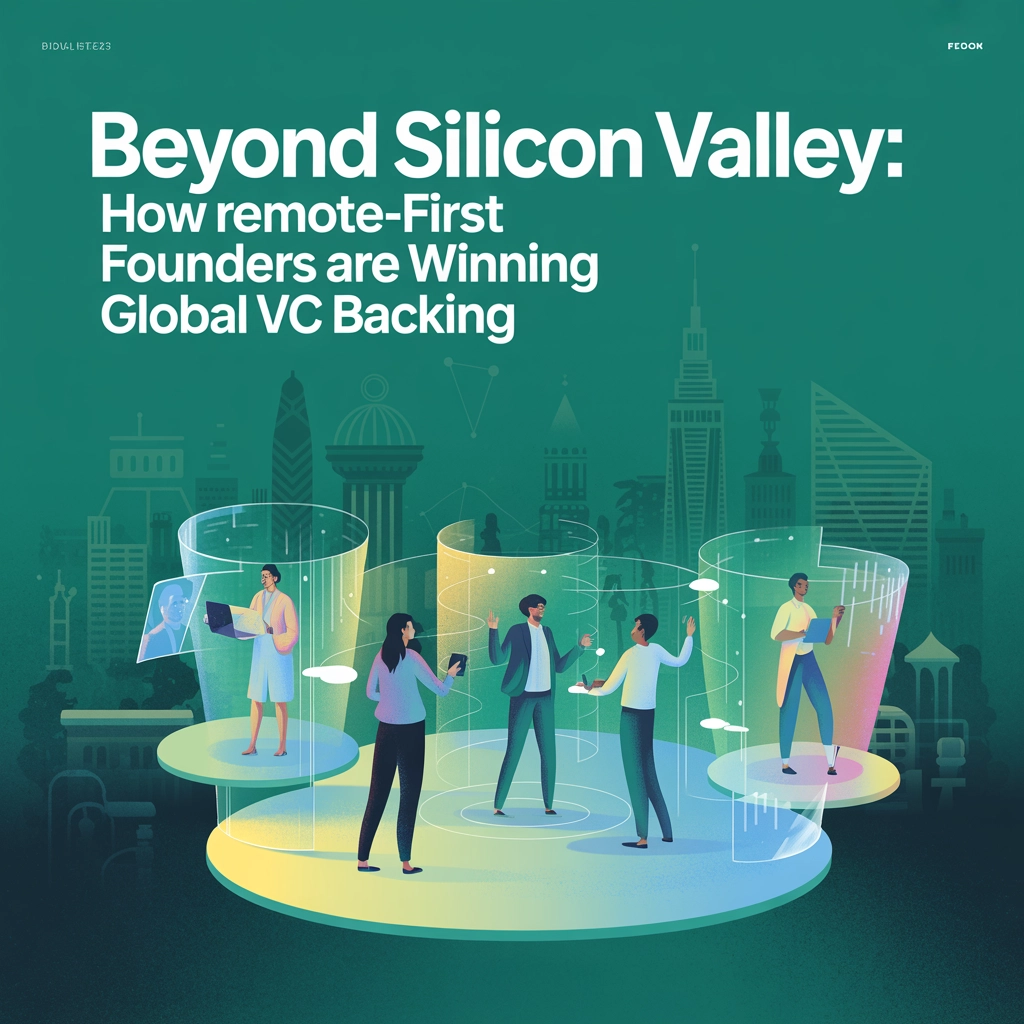
Beyond Silicon Valley: How Remote-First Founders Are Winning Global VC Backing
The New Reality of Venture Capital
Let’s get one thing straight: Silicon Valley isn’t going anywhere. In 2024, it’s locking down an eye-popping 57% of global venture capital funding—even more than in previous years. That’s a solid chunk of the pie, but here’s the twist: remote-first founders operating outside the famed California zip codes are unlocking more global VC money than ever before. How? By using the tools, strategies, and ecosystems the new remote era of work has created.
It’s not about relocating to San Francisco anymore. Today’s growth stories are coming from Austin, Miami, Denver, Tel Aviv, Dubai, and dozens of other spots you’d never expect. The bottom line: with the right approach, talent, and support, ambitious founders can win—no matter where they live.
Remote Work is Here to Stay (and It’s a Gamechanger)
The pandemic didn’t just introduce flexible work schedules— it fundamentally changed the game for startups. Fully distributed teams became the default. The result? Investors and accelerators had to adapt fast, creating new norms that leveled the playing field for founders everywhere.
The numbers don’t lie:
- In 2021, VC firms outside traditional tech hubs raised over $21 billion—up from barely $3 billion a decade earlier.
- 1,445 new venture firms popped up in “secondary” (but now thriving) startup ecosystems between 2011 and 2021.
- New York alone invested $10B+ in early-stage capital in non-major ecosystems last year.
That’s not just momentum. That’s a tidal wave.

How Remote-First Founders Crack the VC Code
1. Tapping into Virtual Accelerator Programs
Accelerators aren’t just for those on Sand Hill Road anymore. Top programs now welcome remote founders, offering connections, perks, and intensive education without the need for a Bay Area address. Consider:
- M Accelerator: Fully online, small cohorts, loaded with perks, hands-on coaching, and equity-friendly terms.
- Y Combinator: Hybrid programming lets founders anywhere plug into this legendary network—with the same chance to pitch at Demo Day.
- Global Niche Accelerators: Fintech, cleantech, SaaS—whatever your focus, there’s a remote-friendly accelerator ready.
These digital-first programs cut through borders. Founders jump in, build networks, and access investors that used to be available only to the SF in-crowd.

2. Building Strong Virtual Communities
VC success is more than networking at posh Bay Area happy hours. Digital-first communities now supply the mentorship, hustle, and practical advice once reserved for the Valley elite:
- StartupSauce: A tight-knit mastermind just for SaaS founders outside Silicon Valley, with regular bi-weekly calls and high-level workshops.
- Slack and Discord Communities: Regional and interest-based groups mean no one builds alone—even if you’re the only founder for miles.
- Global Peer Circles: Founders get feedback, share investor tips, and surface opportunities across time zones and continents.
Online communities help erase the loneliness of remote founding. But more than that, they open up strategic guidance and warm intros that can be the difference between landing a term sheet and going it alone.
3. Going Where Investor Strategies Are Changing
Big VCs are hunting for growth… everywhere. Here’s what’s shifting:
- Explosive Investment Outside Major Hubs: NY-based funds poured seven times more into “secondary” cities in 2021 compared to a decade ago.
- Global-First Funds: New venture firms everywhere (1,445 in the last decade) focus exclusively on regions ignored by the traditional power players.
- Middle Eastern Booms: Saudi Arabia and the UAE are funneling record amounts into fintech, AI, and blockchain.
Many investors are looking for the next breakout market. Remote founders outside Silicon Valley can turn their location into a pitch-perfect advantage—and access capital that rivals (or beats) what’s flowing through SV.

4. Launching in Up-and-Coming Startup Hubs
Let’s talk cities: Austin, Miami, Denver, LA, St. Louis, DC. Not long ago, these felt like off-the-beaten-path. Now? They’re surging with startup activity and attracting global VC dollars for a few good reasons:
- Lower Operating Costs: Cheaper office space, lower talent acquisition spend, and better founder burn rates mean your runway lasts.
- Specialization: Some regions double down (Miami for fintech, DC for govtech) and build unique communities investors love.
- New Talent Pools: Local universities, new-tech job seekers, remote-first employees—the war for talent no longer requires a 415 area code.
Remote founders use these advantages to build leaner, smarter, and sometimes even faster than California-based competition.
5. Mastering Digital Relationship Building
Gone are the days when every major deal required four coffees and eight handshakes at The Creamery. The best remote-first founders:
- Craft clear, punchy digital pitches that win investor attention online.
- Nail their Zoom Demo Day and virtual Q&As.
- Send short, data-driven investor updates that build trust and show traction.
- Know when (and where) to fly in for key in-person meetings without draining time or budgets on endless travel.
Being remote isn’t a handicap—it’s a superpower for founders who use their time and energy where it really matters.
The Blueprint: Winning Tactics From Remote-First Funders
Here are some practical ways remote founders are outmaneuvering their zip-coded competitors:
- Be Spotted in the Right Places: Join premium remote communities with high-value connections (like StartupSauce) over crowded, noisy free forums.
- Choose Your Accelerator Wisely: Look for those with a digital-first track record—don’t settle for legacy programs still figuring out remote.
- Sell Your Advantage: Investors want to see founders leaning into their ecosystem’s strengths (lower costs, unique customer bases, or fresh perspectives), not wishing they were elsewhere.
- Bring Data, Not Excuses: Great traction, strong market fit, and smart, measurable KPIs speak louder than proximity to Palo Alto.
What the Data Says (And Why the Trend Keeps Rising)
Despite headlines about Valley dominance, the momentum is real:
- The amount invested in “secondary” markets grew from ~$3B in 2011 to over $21B by 2021.
- New venture firms are starting in cities “off the map”—and their dry powder is fueling local unicorns.
- Unique hubs are emerging around the world, not just in the US. Think Berlin, Bangalore, Tel Aviv, Dubai, Toronto.
Every year, the number of breakout startups from outside SV rises. What’s clear is that talent, drive, and unique perspectives aren’t restricted to a single time zone. Investors are waking up to it—and their checkbooks are following.

The Takeaway: Distributed, Yes. Equal? Not Quite Yet.
Silicon Valley’s gravitational pull is still strong. But the routes to VC success have multiplied, and remote-first founders who use these opportunities are closing previously unthinkable funding rounds from global backers.
You don’t need a Bay Area zip code to play the game. But you do need:
- Digital storytelling chops.
- Access to premium virtual communities.
- A sharp narrative about your market advantage.
- Smart, data-backed communication with investors.
Those who approach remote founding with intention and hustle are already proving that you can build, scale, and win big—even if your HQ is a world away from the Golden Gate.
The next breakout unicorn could come from anywhere. And that’s a trend that’s only accelerating.