Why Traction Beats Pedigree: The Data-Driven Revolution in VC Funding

The Traditional Power of Pedigree
In venture capital, the so-called “founder pedigree” has long ruled the pitch room. Look back a decade—if you had a Stanford degree, a stint at a Big Tech company, or a logo from a prior successful exit on your LinkedIn, odds were, you’d catch a VC’s interest faster than the average founder with a fresh idea. Shorthand for “bet-able founder” often meant access, experience, and the kind of references that came with deep connections.
So why did pedigree wield so much power? Venture capitalists see thousands of startup pitches every year. Digging deep into each opportunity would be overwhelming, so VCs naturally leaned on signals they could easily evaluate: track record, elite credentials, and influential networks. Maybe you were a second-time founder, or a technical lead from a famous unicorn. Those backgrounds opened doors early, gave you respect in meetings, and—sometimes—got you funding before a single product shipped.
While this system built some iconic companies (hey, YouTube, Airbnb, Slack…), it also had a huge downside: it filtered out incredible businesses simply because the founders didn’t fit the familiar pattern. That’s a big miss, because “access” isn’t the same as “execution.” Plenty of teams with less flash and fewer famous friends have built the companies changing our lives today.

Why Traction Is Taking the Driver’s Seat
Now let’s talk about traction. In today’s VC world, traction is the ultimate equalizer. Maybe you don’t have a blue-chip background or a hotshot advisor slinging introductions for you. But if you can prove that users want your product, that you’re growing fast, or you’ve nailed unique business economics—suddenly, you’re at the table with the big players.
But let’s get specific about what “traction” even means. This isn’t just a vanity metric like user signups. VCs want to see proof that your business model works in the real world, not just a pitch deck. That means:
- Sustained revenue growth: Not just a spike, but ongoing gains customers are paying for.
- Blitzscaling potential: Can your team handle rapid growth, new markets, and operational chaos?
- Strategic partnerships: Have you landed big logos or can you demonstrate you’re able to partner for acquisition opportunities?
- Unit economics: Customer acquisition, retention, lifetime value—can you actually make money at scale?
- Market momentum: Early press, engaged user communities, or viral loops that suggest flywheel effects.
- Unique insight or unfair advantage: Maybe it’s your personal experience, the tech you’ve built, or a deep understanding of a neglected market.
In short, real traction is about demonstrating you have a credible shot at those elusive “15-20x” venture returns—something data-obsessed firms increasingly analyze down to the decimal.
Traction lets “mere mortals” (aka 99% of founders) bridge the gap that big names once commanded by default.

Enter the Data-Driven Revolution
Here’s the plot twist: The rise of AI and analytics in venture capital is tipping the scales even further toward traction, and away from pedigree.
Today, more than 75% of VC deal reviews are informed by quantitative data and machine learning. Why? Because the old system simply can’t keep up with the volume and complexity of startups popping up globally—especially with more solo founders and distributed teams building companies from every corner of the world.
Here’s how the data-driven revolution is changing the game:
1. Sourcing From Signals, Not Just Rolodexes
AI crawls public and private data—think Crunchbase trends, GitHub repos, App Store reviews, social media chatter. Data systems flag companies on the rise, based on their velocity and the quality of growth, not whether the founder’s last boss is a VC’s golf buddy.

2. Smarter, Faster Due Diligence
No more relying on gut alone. Machine learning tools can spot hidden patterns in financials, pick apart pitch decks, surface red flags (or under-the-radar strengths), and even benchmark a startup’s traction against thousands of exited companies. What used to take weeks of analyst work now takes hours—ethical hacks and all.
3. Predictive Analytics to Spot Winners Early
Algorithms trained on historic exits (and failures) go beyond basic financials. They look at team dynamics, founder resilience, customer retention, product velocity, and market trends—scoring each opportunity against objective benchmarks. If your traction matches the profile of a company that’s raised a big Series A, chances are you’ll get a fast look—even if you don’t have Sand Hill Road contacts.
4. Reducing Bias, Boosting Diversity
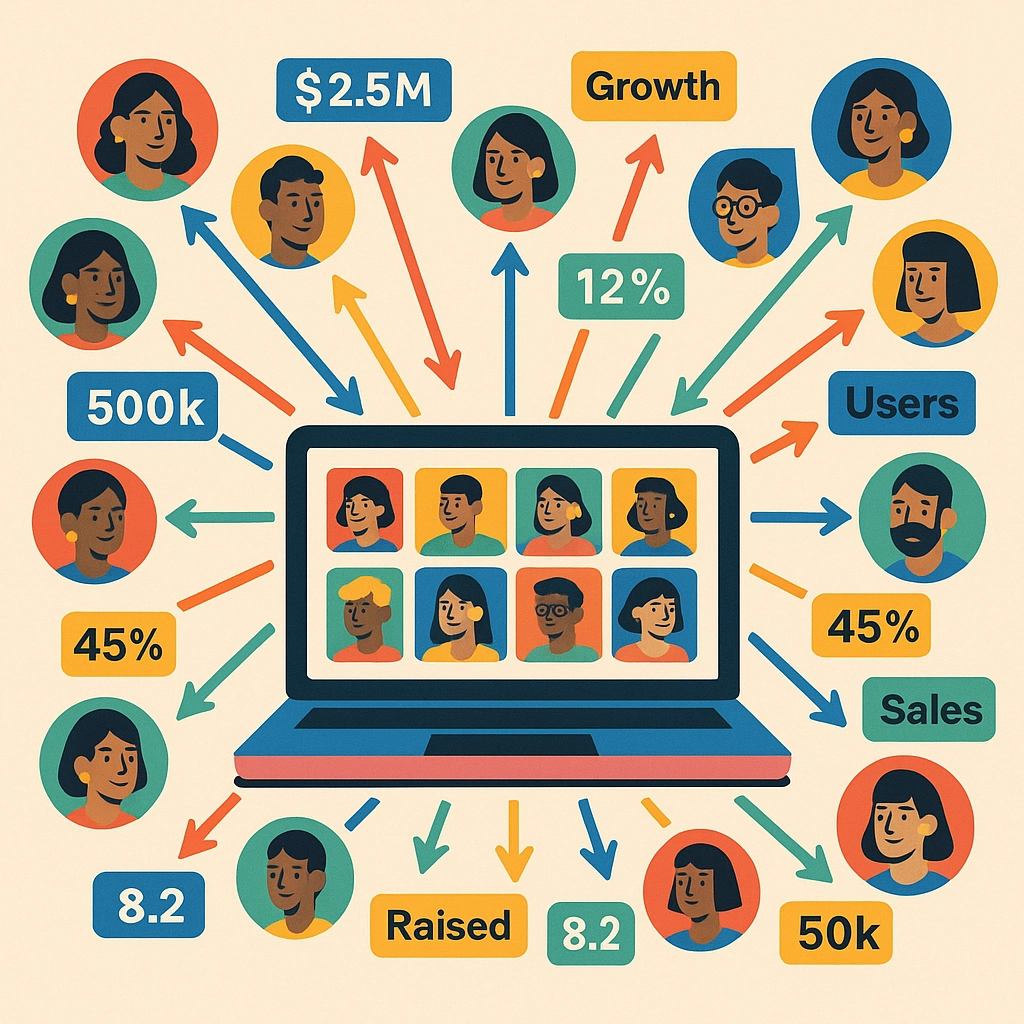
The move to data-driven investing removes some of the old gatekeeping. It means founders without Ivy League credentials or Silicon Valley internships actually get noticed for their business metrics and market progress. Find a way to consistently grow users or revenue, and your spreadsheet speaks louder than your resume.
How Traction Now Wins Over Pedigree
So, is pedigree dead? Not entirely. A founder’s ability to recruit, sell, and inspire, combined with experience, can still give important signals—especially in markets that move quickly or require deep domain knowledge.
But here’s what’s different: VC bets are now filtered through a much stronger data lens. The old “pattern-matching” bias is being replaced with “signal-matching”—where your revenue, velocity, team adaptability, and go-to-market chops can outperform traditional background checks.
Today’s winning signals:
- Quantifiable growth with real retention
- Strategic expansion, not just splashy launches
- Financial discipline plus excitement in the numbers
- A track record of turning limited resources into outsized impact
- Evidence that the team, product, and market are aligned for a big win
Founders can now build a credible story through traction alone. The playbook is open: share your real numbers, show your business works, and cite market data to underscore your thesis. And remember, the ecosystem has changed—VCs equipped with AI don’t need to rely solely on relationships for deal flow. They’re hungry for proof, not just pedigree.
How Startups Can Win in the New Era
The path for emerging founders is clear: focus relentlessly on traction, and use data as your co-pilot. Here’s how to stand out when pedigree isn’t on your side:
- Build and measure: Launch early, talk to users, iterate fast. Use analytics to surface what actually matters—user cohort retention, cost of acquisition, conversion rates—then share that proof in your narrative.
- Show, don’t tell: Data dashboards beat buzzwords every time. Embed charts, customer testimonials, and case studies in every pitch.
- Compete where pedigree is weakest: Niche markets, overlooked customer problems, and new distribution models offer disruption potential where “elite” founders may not be looking.
- Work your story: Be open about what you’ve accomplished so far, what you don’t know, and what data proves you’re on the right track. Authenticity is often more compelling than a resume.
- Lean into the AI trend: Show VCs you understand the new landscape by using data-driven tools in your business—whether that's for product, marketing, or sales.

Conclusion? Let Your Results Speak
The data-driven revolution is making VC funding more accessible, more analytical, and—dare we say—more fun for the scrappy founder. The new rules? It’s less about where you went to school, and more about what you’ve built in the wild.
If you’re laser-focused on traction, disciplined with your story, and comfortable letting your results do the talking, you have a real shot. The rest is just noise.
So, go build. Let the numbers—and your satisfied customers—change the conversation.
🚀 Ready to level up your venture game? Don’t miss your chance – book a free call with us now! Click here to secure your spot: https://zentara.setmore.com
Let’s make things happen together!