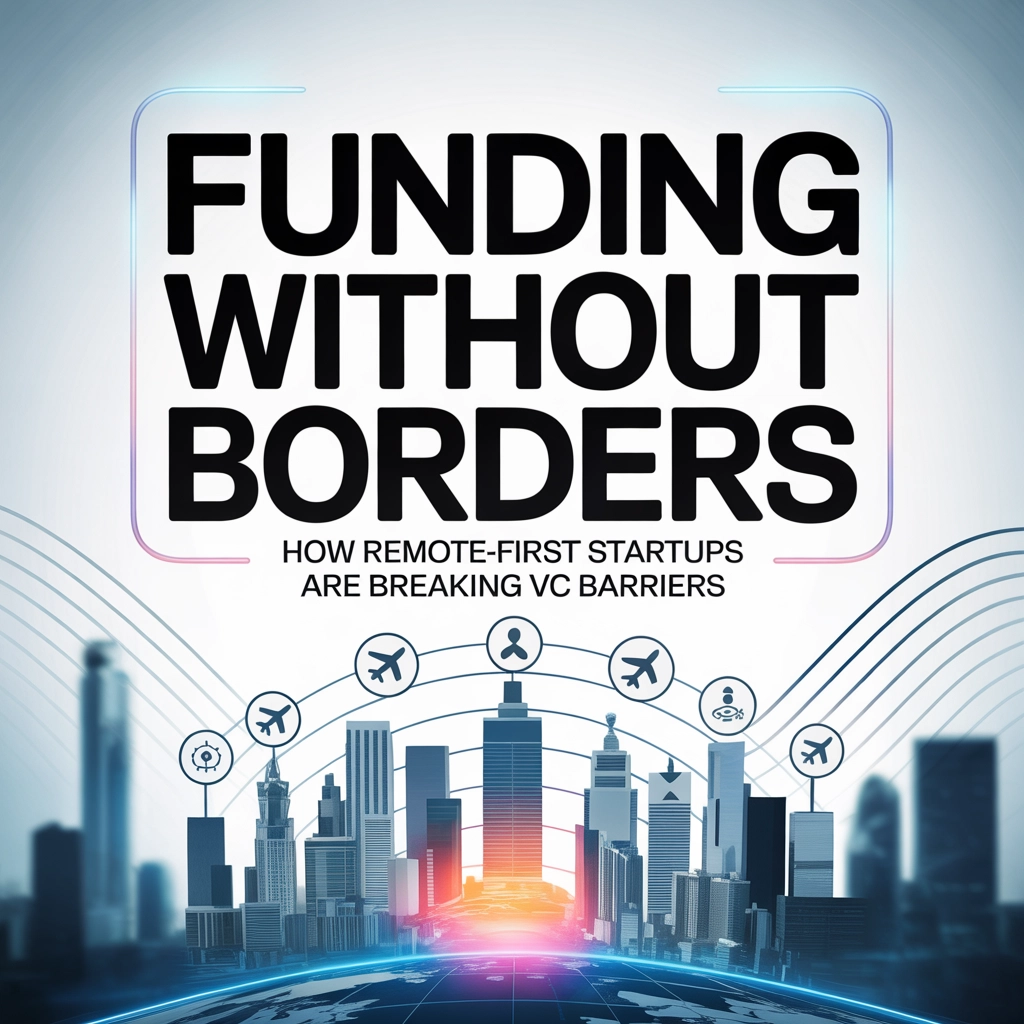
Funding Without Borders: How Remote-First Startups Are Breaking VC Barriers
The New Normal of Startup Funding
The venture capital landscape has undergone a seismic shift. Just a few years ago, founders needed to be in San Francisco, New York, or Boston to have a realistic shot at serious funding. The ritual was predictable: rent expensive office space in a tech hub, schedule in-person meetings with investors, and hope your zip code didn't work against you.
Today, that playbook is being rewritten by remote-first startups that are shattering geographic limitations and changing how capital flows to innovative ideas. At Ventureship, we're seeing this transformation firsthand, and the implications for founders everywhere are profound.
Remote Work: From Pandemic Necessity to Funding Advantage
When COVID-19 forced companies worldwide to adopt remote work almost overnight, few predicted this would permanently alter the venture capital ecosystem. What began as a temporary adjustment has evolved into a strategic advantage for startups willing to embrace a distributed model.
Remote-first companies—organizations built without a central physical headquarters where team members work from anywhere—are demonstrating unprecedented capital efficiency. By eliminating office costs and tapping global talent pools, these startups can extend their runway and scale more efficiently than their office-bound counterparts.

How Remote-First VCs Are Leading the Charge
The rise of remote-first startups has been accompanied by the emergence of investment firms specifically focused on distributed teams. Take Remote First Capital, founded in 2018, which has invested in 64 early-stage remote-first companies across sectors including SaaS, e-commerce, and AI/ML. Their portfolio demonstrates how remote models can succeed across virtually any industry.
These specialized VCs understand that:
- Geographic diversity is a strength: Teams distributed across time zones can work around the clock, accelerating development cycles
- Talent acquisition becomes borderless: Remote-first startups can hire the best people regardless of location
- Capital efficiency increases: Without expensive office leases in prime locations, more funding goes directly to product development and growth
Traditional VC firms are now following suit. According to recent data, over 70% of venture deals in 2024 were closed without in-person meetings, compared to less than 25% pre-pandemic. This shift has opened doors for founders who might never have gained access to Silicon Valley networks.
Breaking Down the Old Barriers
The traditional venture funding model created several barriers that remote-first startups are now dismantling:
1. The Geographic Barrier
Historically, proximity to venture capital hubs was nearly essential for securing funding. Today, startups like OpenRouter (which secured a $40M Series A led by Andreessen Horowitz in 2025) operate with team members across multiple continents. Their success proves that innovation isn't confined to any particular postal code.
2. The Network Barrier
The old adage "it's who you know" dominated fundraising. Remote-first operations have expanded networks beyond physical limitations. Digital communities, virtual accelerators, and online pitch events have democratized access to investors. A founder in rural Iowa can now get in front of top VCs as easily as someone in downtown San Francisco.
3. The Capital Efficiency Barrier
Remote-first startups typically demonstrate greater capital efficiency. Without the burden of expensive office space in tech hubs, these companies show better unit economics from day one—something investors increasingly prioritize in today's market.

Case Studies: Remote-First Success Stories
XBOW: Cybersecurity Without Borders
This AI-driven cybersecurity firm raised an impressive $75M Series B in 2025 with a team distributed across 18 countries. Their remote-first structure allowed them to hire specialized security experts from regions known for cybersecurity talent like Israel, Estonia, and Singapore. This diversity of perspective helped them develop more robust security solutions than competitors limited to single-location talent pools.
What's particularly notable about XBOW is how they turned their remote structure into a competitive advantage during fundraising. Their pitch to investors highlighted how their distributed team could monitor threats 24/7 across different time zones—something impossible for teams clustered in one location.
Govly: Transforming Public Service Remotely
Govly, a platform modernizing government operations, secured significant funding while operating with a fully distributed team. Their success demonstrates how even sectors traditionally resistant to remote work—like government services—can be disrupted by remote-first startups.
The company leveraged remote work to bring together technologists who had previously worked in government with public sector experts across different jurisdictions. This diverse knowledge base would have been impossible to assemble in a single location.
The Technology Enabling Remote Fundraising
Several technological advances have made remote fundraising not just possible, but often preferable:
- Virtual pitch platforms: Specialized software for investor presentations has eliminated the need for in-person pitches
- Digital due diligence tools: Investors can thoroughly evaluate startups without physical site visits
- Secure document sharing: Sophisticated data rooms allow for safe exchange of sensitive financial information
- Asynchronous communication: Founders and investors can collaborate effectively across time zones
These technologies aren't just making remote fundraising viable—they're making it more efficient. Investors report being able to evaluate 30% more deals since adopting virtual processes, leading to more opportunities for founders regardless of location.

Challenges and Solutions in Remote-First Fundraising
Despite the advantages, remote-first startups face unique challenges when fundraising:
Building Trust Remotely
Investor relationships traditionally formed through in-person interaction must now develop virtually. Successful remote-first founders overcome this by:
- Creating detailed, transparent documentation
- Establishing regular investor communication rhythms
- Leveraging video effectively to build personal connections
- Using data dashboards to provide real-time insights into company performance
Demonstrating Team Cohesion
Investors often worry about team dynamics in remote environments. Smart founders address this by:
- Documenting their remote work processes
- Showcasing collaborative outputs
- Implementing structured team bonding activities
- Creating clear communication protocols
Navigating Global Regulatory Complexities
Remote-first often means multi-jurisdictional, which brings regulatory challenges. Forward-thinking startups mitigate this by:
- Partnering with global legal and compliance experts early
- Choosing strategic jurisdictions for incorporation
- Creating clear documentation around international operations
- Developing scalable compliance frameworks
The Future of Borderless Funding
As we look ahead, several trends are emerging that will further break down barriers between innovative startups and capital:
1. Specialized Remote-First Funds Will Multiply
Following pioneers like Remote First Capital, we'll see more funds exclusively targeting distributed teams. These specialized investors bring unique value through networks specifically designed to support remote operations.
2. Secondary Markets Will Become More Accessible
Remote-first operations naturally lead to more distributed cap tables. This is accelerating the development of more accessible secondary markets, giving employees of remote startups greater liquidity options regardless of location.
3. Emerging Markets Will See Accelerated Growth
Without geographic constraints, more capital is flowing to traditionally underserved markets. Countries with strong technical talent but historically limited access to venture funding are seeing unprecedented investment activity.
4. Hybrid Models Will Refine Best Practices
The most successful remote-first startups aren't dogmatic about never meeting in person. Instead, they're developing thoughtful approaches to when physical presence adds value—like periodic team retreats or strategic in-person investor meetings—while maintaining remote operations as their default.
Embracing the Remote-First Advantage
For founders considering the remote-first path, the potential advantages extend beyond just easier fundraising:
- Resilience: Distributed teams proved remarkably adaptable during global disruptions
- Diversity: Remote work enables hiring across different backgrounds, experiences, and perspectives
- Scalability: Growing from 10 to 100 employees doesn't require relocating or expanding office space
- Work-life integration: Teams can design work around their lives rather than vice versa
At Ventureship, we're increasingly investing in remote-first startups because we've seen how this model can create more sustainable, adaptable, and ultimately successful companies.
Conclusion: The Democratization of Venture Capital
The rise of remote-first startups represents more than just a shift in work arrangements—it's fundamentally democratizing access to venture capital. Founders no longer need to relocate to expensive tech hubs, abandon their communities, or conform to Silicon Valley norms to build venture-backed companies.
This transformation benefits everyone in the ecosystem. Founders gain access to more diverse capital sources, investors discover opportunities they would have missed in a location-centric model, and ultimately, innovation flourishes in previously overlooked regions.
The barriers that once restricted venture funding to a privileged few are falling rapidly. In their place, a more accessible, efficient, and global startup ecosystem is emerging—one where great ideas can attract capital regardless of where they originate.
The future of venture funding isn't confined to any zip code. It's borderless, distributed, and more opportunity-rich than ever before.