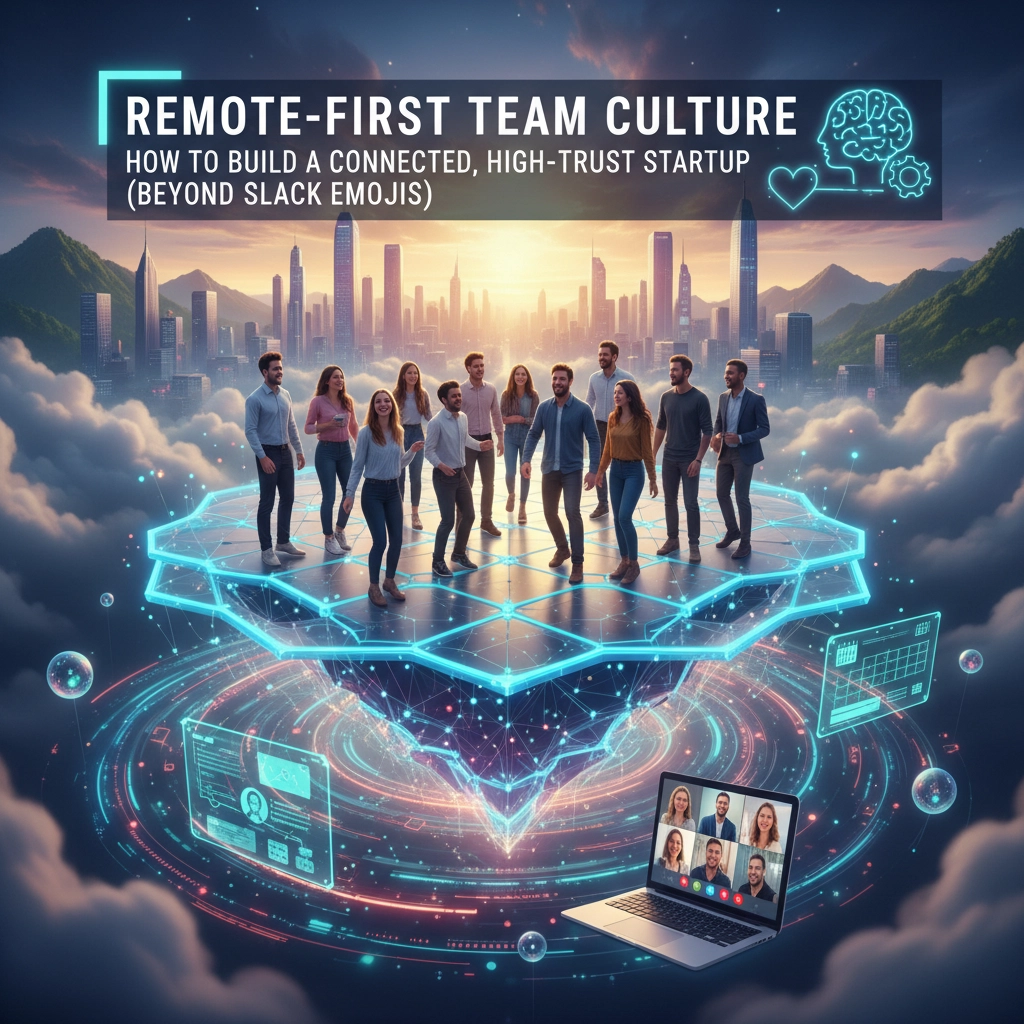
Remote-First Team Culture: How to Build a Connected, High-Trust Startup (Beyond Slack Emojis)
Let's be honest, most remote team "culture" advice sounds like it was written by someone who's never actually managed a distributed team. You get generic tips about virtual coffee chats and fun Slack channels, but nothing that actually helps you build the kind of high-trust environment where your startup can thrive.
Building real remote culture isn't about adding more emoji reactions or scheduling another awkward icebreaker session. It's about creating systems that make your team feel genuinely connected to each other and your mission, even when they're scattered across different time zones.
Here's how to build a remote-first culture that actually works for startups.
Start With Values That Mean Something
Most companies have values like "collaboration" and "innovation" that could apply to literally any business. Your remote team needs values that translate into specific, everyday actions.
Instead of saying "we value transparency," define exactly what that looks like: "When you hit a blocker, you document it in our project channel within 24 hours with a proposed solution or request for help." Instead of "we support each other," try "team members respond to requests in shared channels within 4 hours during business hours."
This specificity becomes crucial when you can't rely on hallway conversations or reading the room. Your values need to work as operating instructions, not just wall decorations.

Master the Art of Over-Communication
Remote teams live or die by their communication habits. But over-communication doesn't mean sending more messages, it means being intentionally clear about context, expectations, and next steps.
In physical offices, you pick up tons of information through body language, overheard conversations, and casual check-ins. Remote teams lose all of that, so you need to compensate deliberately.
Create communication protocols that remove guesswork:
- Daily async updates in a shared channel (not just for managers)
- Clear escalation paths for different types of issues
- Regular context-sharing about bigger picture goals and priorities
- Explicit feedback on communication style and preferences
The goal isn't to micromanage, it's to create psychological safety where people know they have the information they need to do great work.
Build Trust Through Visibility, Not Surveillance
Trust in remote teams comes from making your work visible, not from being watched constantly. The best remote cultures create systems where good work naturally surfaces without anyone feeling monitored.
Set up shared spaces where team members regularly showcase progress, share challenges, and celebrate wins. This could be weekly demo sessions, monthly project retrospectives, or even simple "what I shipped this week" updates.
The key is making these contributions feel valuable rather than performative. People should share updates because it helps the team, not because they're afraid of being seen as unproductive.

Create Connection Opportunities That Don't Suck
Most virtual team building feels forced because it tries to recreate in-person dynamics in digital spaces. Instead, lean into what remote work does well: bringing together diverse perspectives and giving people flexibility to participate authentically.
Try show-and-tell sessions where team members share something they're passionate about, could be a side project, a hobby, or even just an interesting article they found. These work because they're genuinely interesting and reveal who people are beyond their job titles.
Host optional learning sessions where team members teach each other skills, whether work-related or completely random. Someone might run a 30-minute session on Excel shortcuts while another teaches basic photography principles. These create shared experiences while building actual capabilities.
The best remote connections happen when people opt in because they're excited about something, not because attendance is mandatory.
Measure What Matters (And Act on It)
You can't manage what you don't measure, but most companies measure the wrong things when it comes to remote culture. Hours logged and messages sent tell you almost nothing about team health.
Instead, track leading indicators of cultural problems:
- How long it takes for new team members to make their first meaningful contribution
- Whether people are comfortable asking questions in public channels
- How often decisions get made without input from affected team members
- Whether people feel equipped to do their best work
Use anonymous feedback tools regularly, but don't stop there. Create safe spaces for direct conversations about what's working and what isn't. The goal is spotting problems before they become crises.

Set Boundaries That Actually Work
Remote work can easily turn into always-work if you don't create intentional boundaries. But startup culture often makes people feel like they need to be constantly available to prove their commitment.
Build boundaries into your systems, not just your policies:
- Default to async communication and document when sync is actually necessary
- Create "deep work" blocks where interruptions are discouraged
- Establish clear escalation criteria for truly urgent issues
- Model healthy disconnect behavior at the leadership level
Protect your team's ability to do focused work by making it organizationally unacceptable to constantly interrupt people with "quick questions" that could wait.
Make Your Culture Scale From Day One
Early-stage startups often rely on informal culture that breaks down as soon as you hire beyond your immediate network. Build systems that can grow with you.
Document not just what you do, but why you do it. New hires should understand the reasoning behind your cultural practices, not just follow them blindly. This helps them adapt practices appropriately as situations change.
Create onboarding experiences that immerse people in your actual work culture, not just HR requirements. Pair new hires with experienced team members for real projects, not just training exercises.

Focus on Outcomes, Not Activities
The biggest mistake in remote culture building is getting caught up in the appearance of culture rather than the substance. Having a #random channel doesn't mean you have good culture. Neither does a weekly all-hands meeting or a fancy collaboration tool.
Good remote culture shows up in results: people doing their best work, teams making decisions quickly with the right information, problems getting solved before they become crises, and everyone feeling like they're part of something meaningful.
Test your cultural practices against this simple question: "Does this help us achieve our mission better?" If the answer is no, cut it and try something else.
The Real Secret: Culture Is a System, Not an Event
Building remote culture isn't about finding the perfect team building activity or communication tool. It's about creating interconnected systems that consistently reinforce the behaviors and outcomes you want.
Every policy, process, and practice sends a signal about what you value. Make sure those signals align with the culture you're actually trying to build, not just the one you think you should have.
The companies that master remote-first culture don't just adapt in-person practices for digital spaces: they reimagine what high-performing teams can look like when geography becomes irrelevant. That's where the real competitive advantage lies.